
Reviewed By Dr. Mike Bahman Norouzinia, DDS
Reading time: three minutes
If you’re missing a tooth, two of the most common replacement options are a dental implant and a dental bridge. Both can restore your smile and improve chewing function, but they work in very different ways. The right choice depends on factors such as your oral health, jawbone condition, budget, and long-term goals.
Is a Dental Implant Better Than a Bridge?
In many situations, a dental implant is considered the preferred long-term solution because it replaces both the tooth root and the visible tooth. Implants do not rely on neighboring teeth for support and help maintain natural chewing function.
However, that does not mean implants are always the best choice for every patient. A dental bridge may be appropriate when adjacent teeth already need crowns, when bone volume is limited, or when a faster treatment timeline is preferred. The best option depends on your specific circumstances and treatment goals.
How Dental Implants and Bridges Work
Although both treatments replace missing teeth, they do so in different ways.
Dental Implant
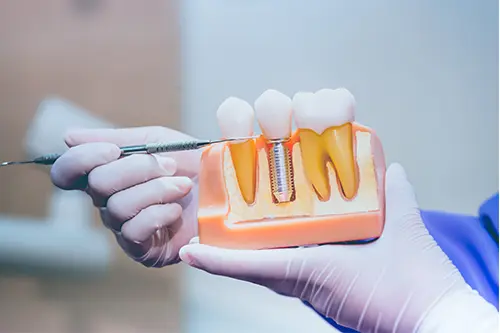
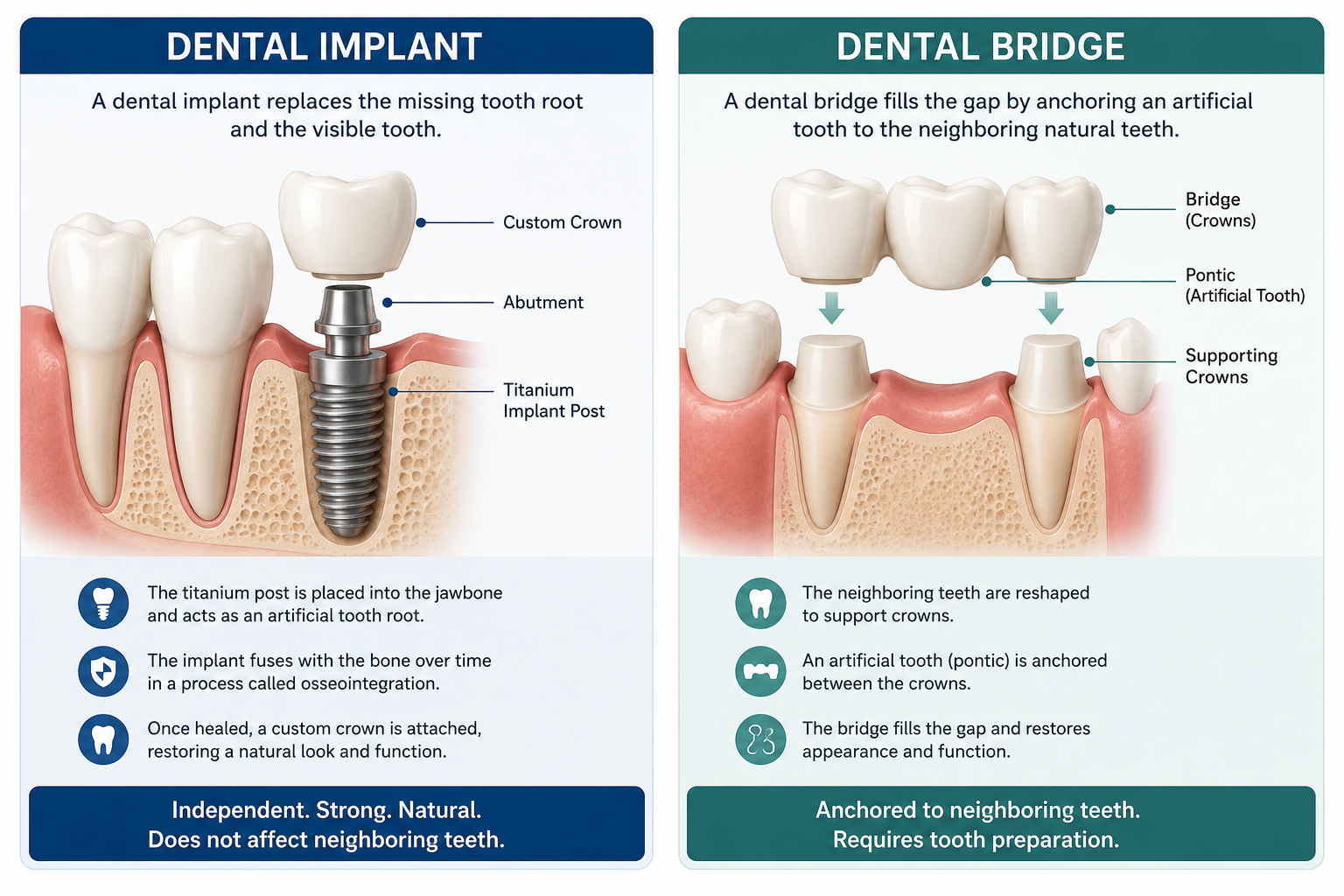
A dental implant consists of a titanium post placed into the jawbone, an abutment, and a custom crown. The implant functions like an artificial tooth root and becomes integrated with the bone during healing. Once restored, the replacement tooth looks and functions much like a natural tooth.
Dental Bridge
A traditional dental bridge fills the gap using an artificial tooth that is supported by crowns placed on the neighboring teeth.
To create room for these crowns, the adjacent teeth usually need to be reshaped. The bridge then spans the space where the missing tooth was located.
Key Differences Between a Dental Bridge and an Implant
Dental bridges typically have a lower upfront cost and can often be completed more quickly than implant treatment. However, they rely on adjacent teeth for support and do not prevent the bone loss that naturally occurs after a tooth is lost.
Dental implants and bridges both replace missing teeth, but they offer different advantages. Dental implants replace the tooth root and can help preserve the jawbone over time. They also do not require support from neighboring teeth and can last for decades with proper care.
The best option depends on factors such as your oral health, bone support, treatment goals, timeline, and budget.
Implant-Supported Bridges for Multiple Missing Teeth
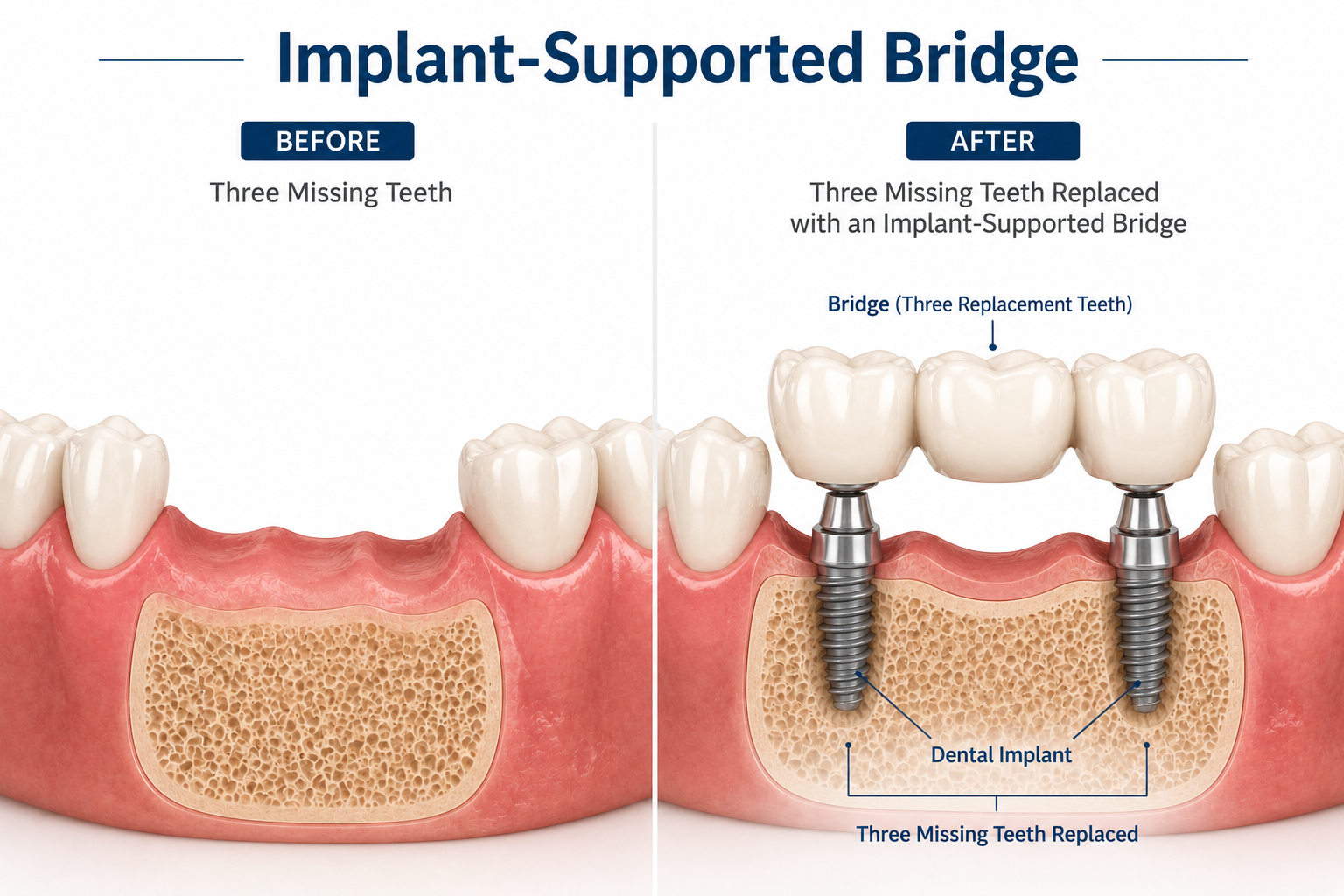
For patients missing several teeth in a row, an implant-supported bridge may be another treatment option. Unlike a traditional bridge that relies on neighboring teeth for support, an implant-supported bridge is anchored to dental implants placed in the jawbone.
This approach can replace multiple missing teeth with fewer implants while helping preserve the underlying bone. It also avoids the need to prepare adjacent healthy teeth for crowns. For some patients, an implant-supported bridge provides an effective balance between replacing multiple teeth and limiting the number of implants required.
Dental Implant Specialists in Highlands Ranch, CO
Choosing between a dental implant and a bridge is not always straightforward. Factors such as bone volume, gum health, the condition of neighboring teeth, and the number of missing teeth can all influence which option makes the most sense.
At Highlands Ranch Periodontics & Dental Implants, Dr. Mike Norouzinia focus exclusively on periodontal care and dental implant treatment. Using advanced imaging and comprehensive treatment planning, they help patients understand their options and develop a treatment plan based on their long-term oral health goals.
Dental Implants in Highlands Ranch, CO
To book a dental implant consultation at our periodontal office in Highlands Ranch, call (303) 683-1144 or visit us at 9090 Ridgeline Blvd #225, Highlands Ranch, CO 80129.
FAQs
For a single missing tooth, a dental implant is often recommended because it replaces the tooth without relying on neighboring teeth for support. However, a bridge may be a suitable option when adjacent teeth already need crowns, surgery is not desired, or a shorter treatment timeline is preferred.
A bridge may be recommended when adjacent teeth already need crowns, when bone support is limited, when surgery is not ideal, or when a shorter treatment timeline is preferred.
Dental implants can last for decades with proper care. Traditional bridges generally have a shorter lifespan and will need replacement after several years due to wear or problems affecting the supporting teeth.
Yes. In many cases, a dental bridge can be replaced with a dental implant. However, the condition of the surrounding bone and neighboring teeth must be evaluated first to determine whether implant placement is appropriate.