
Reviewed by Dr. Kerri Font, DDS
Reading time: three minutes
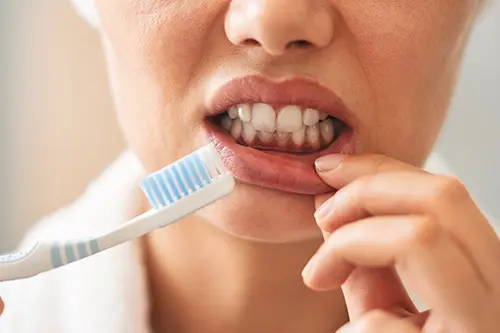
Gingivitis can affect people of all ages and often develops without obvious warning signs. Even when symptoms seem minor, early gum inflammation should be taken seriously. Identifying gingivitis early helps protect gum health and reduce the risk of more advanced periodontal disease.
What Is Gingivitis?
Gingivitis is the earliest stage of gum disease and involves inflammation of the gums caused by plaque buildup along the gumline. Plaque is a sticky film of bacteria that forms on the teeth each day and can irritate the gums when it is not removed effectively.
Initially, gingivitis affects only the gums and does not damage the bone or supporting structures of the teeth. With appropriate care, this inflammation can often be managed before more advanced changes develop.
Without treatment, gingivitis may progress to periodontitis, a more advanced condition associated with bone loss and tooth loss.
Gingivitis Symptoms
Gingivitis symptoms are often subtle and may develop gradually. Some patients experience noticeable changes, while others have minimal discomfort.
Common symptoms include:
- Red or swollen gums
- Bleeding during brushing or flossing
- Gum tenderness or irritation
- Persistent bad breath
- Changes in the appearance of the gumline
Because symptoms can be mild, gingivitis may go unnoticed without regular dental evaluations.
How Gingivitis Is Diagnosed
Gingivitis is diagnosed through a clinical examination of the gums. Your dentist evaluates gum color, swelling, bleeding, plaque or tartar buildup, and measures the depth of the spaces between the gums and teeth, known as periodontal pockets.
Treatment Options
Professional care is an important part of treating gingivitis, but successful management also depends on consistent daily care at home. Treatment typically involves regular professional cleanings, which may be scheduled more frequently at first. Scaling and root planing may also be recommended if gingivitis is more advanced.
If gingivitis is not addressed early or daily oral hygiene does not improve, treatment can become more involved and more costly as the condition progresses.
How to Treat Gingivitis at Home
Daily oral care plays a key role in managing gingivitis. At-home care supports professional treatment and helps maintain gum health.
Recommended steps:
- Brush twice daily for two minutes using proper technique
- Floss once daily with regular floss or a water flosser
- Use specialized oral rinses when recommended
Consistent daily care helps reduce inflammation and supports long-term gum health between professional visits.
Schedule a Periodontal Evaluation
Dr. Bahman (Mike) Norouzinia and Dr. Kerri Font focus on evaluating gum inflammation and recommending treatment based on the stage of gum disease. As periodontists, they specialize in diagnosing and treating conditions that affect the gums and supporting structures of the teeth.
To book an appointment at our Highlands Ranch location or our Sloan’s Lake location, call (303) 683-1144.
FAQs
Gingivitis itself is not contagious. However, the bacteria that contribute to plaque buildup can be transferred through saliva.
Gingivitis often appears as red, swollen, or irritated gums that may bleed when brushed or flossed. Healthy gums are typically firm and pale pink.
Gingivitis can contribute to persistent bad breath due to bacterial buildup along the gumline. Addressing plaque and inflammation often helps improve breath.