
Reviewed by Dr. Kerri Font, DDS
Reading time: four minutes
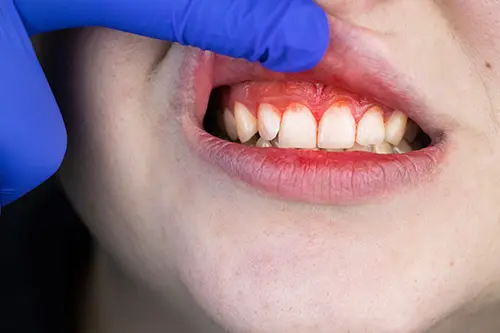
Gum infection symptoms can begin with mild swelling or bleeding and progress to pain, bad breath, and gum recession if left untreated. While some infections remain limited to the surface tissues, others spread below the gumline and affect the bone that supports your teeth.
Common Gum Infection Symptoms
Gum infections can begin with mild irritation and progress to more serious damage without appropriate care.
Common symptoms may include:
- Red, swollen gums
- Bleeding when brushing or flossing
- Gum tenderness or pain
- Bad breath
- Pus between the teeth and gums
- Gum recession
- Loose teeth
Persistent symptoms require evaluation to prevent long-term damage.
What Causes a Gum Infection?
Most gum infections develop when bacteria accumulate in plaque along the gumline. When plaque is not removed effectively, the bacteria can irritate gum tissue and lead to inflammation or infection.
In some situations, symptoms may also be related to viral infections or localized bacterial infections that develop in specific areas of the gums.
Types of Gum Infections
Several conditions can cause infection in the gums, each with different symptoms and treatment needs.
Gingivitis
Gingivitis is the earliest stage of gum disease. It involves inflammation of the gums without damage to the bone supporting the teeth. Symptoms often include redness, swelling, and bleeding.
Periodontitis
Periodontitis is a more advanced infection that affects the bone and connective tissues that support the teeth. Without treatment, it can lead to bone loss and tooth instability.
Gum Abscess
A gum abscess is a localized bacterial infection that may cause swelling, pain, and pus formation near the gumline. Abscesses require prompt dental evaluation.
Gingivostomatitis
Gingivostomatitis is caused by a viral infection and may lead to painful sores in the mouth and inflamed gum tissue. This condition is typically managed differently from periodontal infections.
Gum Infection Treatment
Treatment depends on the cause and severity of the infection. Early care focuses on removing bacterial buildup and controlling inflammation.
Gum infection treatment may include:
- Professional dental cleaning for early gingivitis
- Scaling and root planing to remove bacteria below the gumline in deeper infections
- Antibiotic therapy when bacterial infection requires additional management
- Surgical periodontal treatment in advanced cases involving bone loss
- Drainage of abscesses to control localized infection
Viral infections such as gingivostomatitis require supportive medical care rather than periodontal care.
When to See a Periodontist For a Gum Infection
Some gum infections remain limited to surface inflammation, while others affect the bone that supports your teeth. Persistent bleeding, swelling, gum recession, or ongoing bad breath may signal a condition that requires specialized periodontal care.
At Highlands Ranch Periodontics and Implant Center, Dr. Mike Norouzinia, DDS, and Dr. Kerri Font, DDS, focus on diagnosing and treating conditions that affect the gums and supporting bone. Their expertise in periodontal disease allows them to identify infections early and recommend appropriate treatment to protect long-term oral health.
Periodontist in Highlands Ranch, CO
To book a periodontal evaluation at our Highlands Ranch location or our Sloan’s Lake location, call (303) 683-1144.
FAQs
Mild gum irritation may improve with good oral hygiene, but most gum infections require professional evaluation and treatment. Without care, infections can progress and affect deeper tissues.
In rare cases, severe, untreated infections can spread to other areas of the body. Most gum infections are manageable when diagnosed early and treated by a dental professional.
Gingivostomatitis is commonly caused by viral infections, such as herpes simplex virus, which can spread through close contact with infected saliva or sores.